I. Introduction: Canada’s Tyre Anti Dumping Investigation
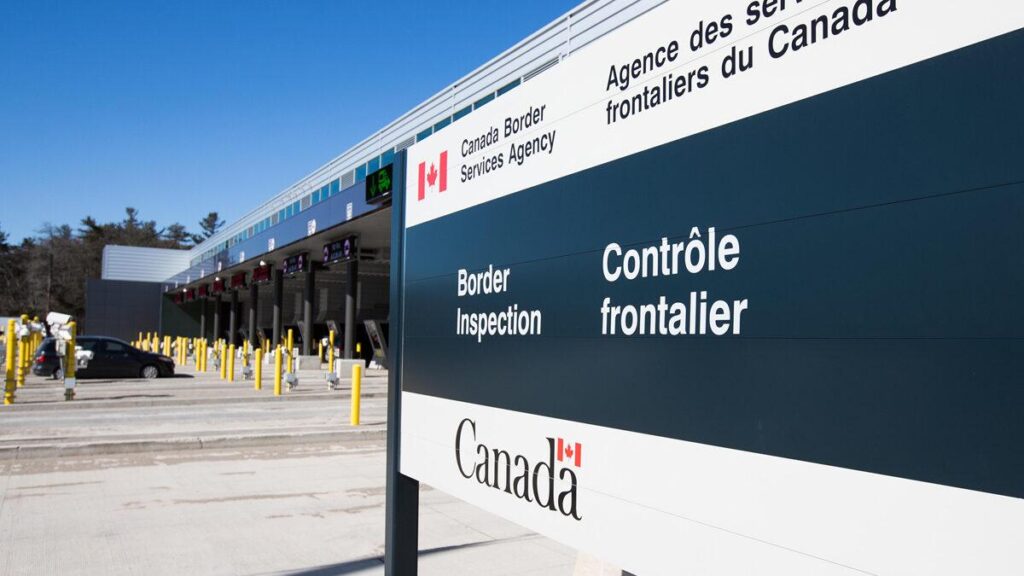
On August 31, 2026, the Canada Border Services Agency (CBSA) opened dumping and subsidizing investigations into certain truck and bus tires from China. The investigations followed a complaint from the Canadian Retread Manufacturers Association and Michelin North America (Canada) Inc.
The case is being conducted under Canada’s Special Import Measures Act (SIMA). The Canadian International Trade Tribunal (CITT) is conducting a separate preliminary injury inquiry. No final duty rate has been established.
For buyers, the tyre anti dumping investigation is mainly relevant to product coverage, potential import costs and future sourcing decisions.
II. What Truck and Bus Tires Are Covered?
The investigation covers certain pneumatic rubber tires for trucks, buses, trailers, and medium- and heavy-duty vehicles.
The main covered rim sizes are:
- 17.5 inches
- 19.5 inches
- 22.5 inches
- 24.5 inches
- Equivalent metric sizes
The scope includes new and retreaded tires, radial and non-radial tires, tube and tubeless tires, and tires mounted or unmounted on wheels or rims.
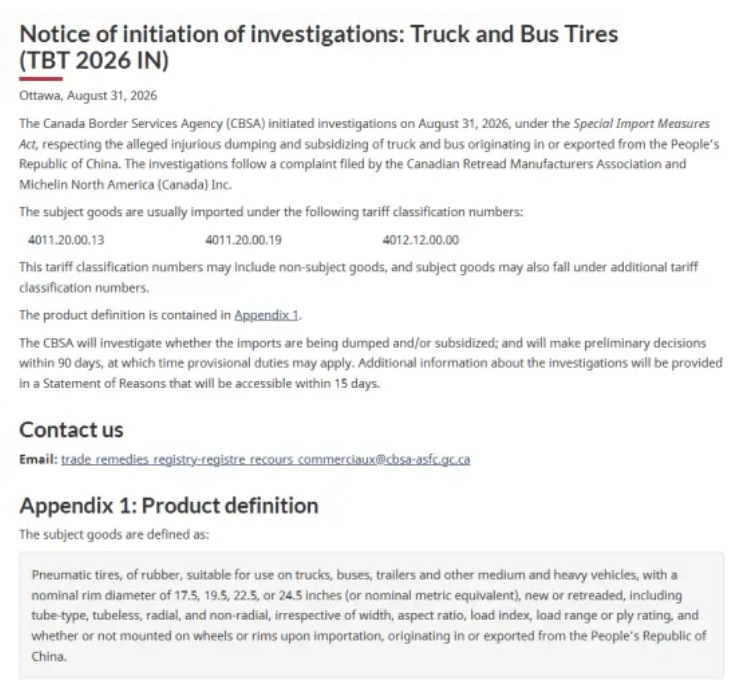
Passenger-car tires and products outside the defined truck and bus tire scope are not automatically covered. Buyers should check the official product definition before assessing potential duties or the impact on tire in Canada imports.
III. China’s Position in the Canadian Tire Market
China is a major supplier of truck and bus tires to Canada.
According to CBSA investigation data, Chinese products accounted for:
- 44.6% of Canadian truck and bus tire imports in 2025
- 48.9% in Q1 2026
The average unit price of Chinese subject tires fell from about C$181 in 2022 to C$154 in 2025, a decrease of around 15%.
Canadian producers alleged that lower-priced imports contributed to price undercutting and price suppression. CBSA found sufficient evidence to start the investigation, but this does not represent a final injury finding.
IV. Chinese Tire Tariffs and Key Investigation Dates
On September 15, 2026, CBSA released its Statement of Reasons. It estimated a 29.1% dumping margin for the period from April 1, 2025, to March 31, 2026.
The Chinese tire tariffs issue remains under investigation. The 29.1% figure is an investigation-stage estimate, not a final duty rate. The subsidizing investigation is also continuing, and no final subsidy amount has been established.
Key dates include:
- August 31, 2026: CBSA opened the investigations
- September 15, 2026: Statement of Reasons released
- October 7, 2026: Responses from exporters and the Chinese government due
- October 30, 2026: CITT preliminary injury determination
- November 30, 2026: CBSA preliminary dumping and subsidizing determinations
- March 1, 2027: CBSA final determinations or termination of the investigations
Until the investigation reaches a final stage, buyers should not treat the estimated dumping margin as a confirmed duty.
V. What the Investigation Means for Buyers
For companies sourcing Chinese truck tires for the Canadian market, the investigation may affect landed costs and sourcing decisions.
1. Check whether your products are covered
Product size, application, construction and other specifications should be compared with the official scope.
2. Review landed costs
Buyers should model possible duty exposure together with FOB prices, freight, customs costs and other import expenses. This is particularly relevant when assessing the potential impact of the anti dumping tyre investigation on future orders.
3. Ask suppliers about the investigation
Chinese exporters involved in the case may receive requests for information from CBSA. Buyers should confirm whether their suppliers are participating and whether they have received official requests.
4. Keep sourcing options open
Companies importing truck tires into Canada may consider alternative suppliers or supply routes while the investigation continues.
VI. What Overseas Buyers Should Do Now
Buyers sourcing truck tires for Canada can take the following steps:
- Confirm whether each tire size is within the investigation scope.
- Ask suppliers for the latest information on CBSA participation.
- Review current and potential landed costs.
- Check contracts for clauses related to duties or tariff changes.
- Monitor CBSA and CITT decisions.
- Keep alternative suppliers available where practical.
For companies buying truck tires Canada, the key issue is not simply the estimated dumping margin. The actual impact will depend on the final investigation results, product scope, supplier status and total landed cost.
VII. Conclusion: What the Canadian Tire Policy Means for Buyers
Canada’s investigation into Chinese truck and bus tires is still ongoing. The 29.1% estimated dumping margin is not a final duty, and no final subsidy amount has been established.
For buyers, the Chinese tire tariffs issue should be assessed together with product coverage, supplier status and total landed cost rather than the estimated dumping margin alone.
Companies sourcing truck tires Canada should confirm product coverage, communicate with suppliers, review landed costs and follow official CBSA and CITT decisions before making long-term purchasing decisions.
Forlander Tire is actively responding to the investigation and is submitting relevant information on its production, sales, costs and other supporting materials to the authorities. Through active cooperation with the investigation, Forlander is seeking an individual duty rate that reflects its own business and cost data and may be lower than rates applicable to non-cooperating exporters, subject to the final determination by CBSA.
For Canadian buyers sourcing Forlander tires, the company will continue to monitor the investigation and provide relevant updates as official decisions are issued. Buyers should also confirm product coverage, communicate with suppliers, review landed costs and follow CBSA and CITT decisions before making long-term purchasing arrangements.