I. Introduction
Why does Canada need to import so many tires from China despite having its own factories? Because those factories are foreign-owned, limited in capacity, and serve the entire North American market—not just Canada—leaving a gap in the mid-to-low end.
This article analyzes the current state and prospects of the Chinese tire brand presence in the Canadian market from the perspectives of local Canadian tire production capacity, 2025 export data, the core advantages of Chinese tires, major suppliers, and Forlander Tire’s market practices in Canada.
II. Canadian Tire Industry
The Canadian tire industry has three core characteristics: limited scale, foreign dominance, and a prominent retreading sector.
Canada has several tire manufacturing plants, all owned by international tire companies. According to industry data, the annual revenue of the Canadian tire manufacturing industry is approximately CAD 3.2 billion.
Existing Plants and Capacities
1. Bridgestone Canada Inc. (a major Canadian tire manufacturer)
Location: Joliette, Quebec
Year opened: 1966
Employees: 1,200 (unionized)
Tire types: Passenger tires, light truck tires
Daily capacity: 20,000 units
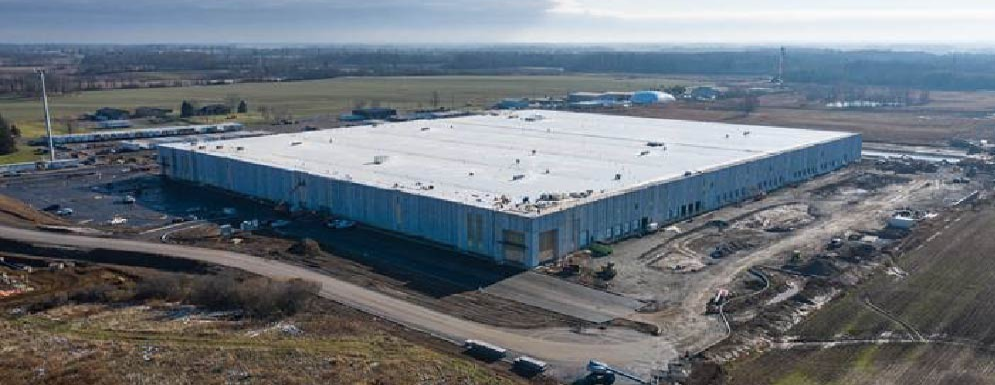
2. Goodyear Canada Inc.
Medicine Hat Plant
Location: Medicine Hat, Alberta
Year opened: 1960
Employees: 300 (unionized)
Tire types: Passenger tires
Daily capacity: 13,000 units
Napanee Plant
Location: Napanee, Ontario
Year opened: 1960
Employees: 800
Tire types: Passenger tires
Daily capacity: 20,000 units

3. Michelin North America (Canada) Inc.
Bridgewater Plant
Location: Bridgewater, Nova Scotia
Year opened: 1973
Employees: 1,148
Tire types: Passenger tires, light truck tires
Annual capacity: 60,000 tons
Granton-Pictou Plant
Location: Granton-Pictou, Nova Scotia
Year opened: 1971
Employees: 651
Tire types: Passenger tires, light truck tires
Annual capacity: 9,000 tons
Waterville Plant
Location: Waterville, Nova Scotia
Year opened: 1982
Employees: 1,281
Tire types: Medium truck and bus tires
Annual capacity: 137,500 tons

Total capacity: Canadian tire factories have a daily capacity of approximately 53,000 units (mainly passenger and light truck tires) and an annual capacity of approximately 206,500 tons (mainly Michelin’s truck and bus tire capacity).
Canada has a distinctive tire retreading sector. For example, Fountain Tire recently expanded a retreading plant in London, Ontario, with an annual capacity of over 30,000 tires, increasing the national retreading capacity by 25%. Retread tires cost only 30%-50% of new tires, a common strategy for commercial fleets to reduce operating costs. However, retreading is ultimately a reuse of old tires and cannot replace the original supply of new tires.
Although Canada has tire plants, these factories are controlled by headquarters in the United States, France, or Japan. Their product line planning and output allocation serve the entire North American market, not Canadian needs. Therefore, the mid-to-low end of the market needs to be filled.
III. 2025 Chinese Tire Export Data to Canada
1. Passenger Car Tires (PCR)
According to the latest export data, China’s passenger car tire exports to Canada maintained stable growth in 2025. Among major export destinations, Canada ranked 12th, rising in rank compared to 2024.
2025 China PCR Tire Exports by Major Country
| Rank | Country | Volume (10k units) | Value (100M RMB) | YoY Volume | YoY Value | Rank vs 2024 | 2025 Avg Price (USD/unit) | 2024 Avg Price (USD/unit) |
|---|---|---|---|---|---|---|---|---|
| 1 | UK | 2215.21 | 5.47 | -8.18% | -9.47% | → | 24.71 | 25.06 |
| 2 | Russia | 1853.92 | 5.10 | 4.05% | -4.04% | ↑ | 27.54 | 29.86 |
| 3 | Brazil | 2524.67 | 4.85 | -1.65% | -9.71% | ↓ | 19.22 | 20.94 |
| 4 | Germany | 1472.55 | 4.70 | -6.78% | 2.67% | → | 31.91 | 28.97 |
| 5 | Japan | 1407.34 | 3.65 | 18.61% | 17.36% | ↑ | 25.91 | 26.19 |
| 6 | Netherlands | 1161.74 | 3.33 | -5.67% | -2.20% | ↓ | 28.70 | 27.68 |
| 7 | Australia | 902.86 | 3.10 | 1.95% | 2.41% | ↑ | 34.37 | 34.22 |
| 8 | Saudi Arabia | 1173.88 | 3.04 | 3.38% | 2.84% | ↑ | 25.86 | 26.00 |
| 9 | Spain | 1011.55 | 2.57 | 3.79% | 7.20% | ↑ | 25.40 | 24.60 |
| 10 | Italy | 935.29 | 2.48 | -5.03% | -1.88% | ↑ | 26.53 | 25.68 |
| 11 | France | 939.86 | 2.46 | -14.31% | -10.86% | ↓ | 26.23 | 25.21 |
| 12 | Canada | 727.38 | 2.37 | 0.35% | -0.64% | ↑ | 32.64 | 32.97 |
| 13 | South Korea | 612.80 | 2.25 | 30.56% | 40.89% | ↑ | 36.72 | 34.03 |
| 14 | Mexico | 838.35 | 1.99 | -40.88% | -40.40% | ↓ | 23.79 | 23.60 |
| 15 | UAE | 816.17 | 1.93 | -29.67% | -25.03% | ↓ | 23.67 | 22.20 |
Canada PCR Data Summary:
Export volume: 7.2738 million units, up 0.35% YoY
Export value: RMB 237 million, down 0.64% YoY
Average price: **$32.64/unit** (compared to $32.97/unit in 2024)
Rank: 12th, up from 2024
During the same period, China’s PCR tire exports to Mexico fell sharply by 40.88%, and to the UAE by 29.67%. In contrast, the Canadian market maintained relatively stable demand, demonstrating its resilience as a destination for Chinese tire exports.
Compared to Canada’s local daily tire capacity of 53,000 units (approximately 19 million units per year), China’s PCR exports alone reached 7.27 million units to Canada, accounting for about 38% of local annual capacity.
2. Truck and Bus Tires (TBR)
Truck and bus tires are core consumables for commercial fleets and the logistics industry, and their market demand directly reflects a country’s economic activity. China’s TBR tire exports to Canada also performed strongly in 2025, with Canada successfully ranking among the top ten markets for Chinese TBR exports.
2025 China PCR Tire Exports by Major Country
| Rank | Country | Volume (10k units) | Value (100M USD) | YoY Volume | YoY Value | 2025 Avg Price (USD/unit) | 2024 Avg Price (USD/unit) |
|---|---|---|---|---|---|---|---|
| 1 | Mexico | 337.75 | 3.19 | +11.50% | +10.00% | 94.40 | 95.37 |
| 2 | Russia | 322.77 | 3.02 | +13.90% | +18.70% | 93.72 | 90.71 |
| 3 | Saudi Arabia | 307.47 | 2.63 | +6.90% | +8.60% | 85.47 | 84.66 |
| 4 | UAE | 277.97 | 2.42 | -5.40% | -5.90% | 87.00 | 87.58 |
| 5 | USA | 133.45 | 1.86 | +24.50% | +24.30% | 139.56 | 139.67 |
| 6 | Indonesia | 96.81 | 1.31 | +15.40% | +12.80% | 135.34 | 137.64 |
| 7 | Australia | 108.78 | 1.22 | -8.70% | -9.70% | 112.00 | 113.14 |
| 8 | Vietnam | 78.54 | 1.00 | +4.10% | +1.90% | 127.55 | 130.61 |
| 9 | Canada | 88.82 | 0.95 | +35.10% | +35.70% | 107.16 | 106.93 |
| 10 | Philippines | 83.41 | 0.83 | +8.60% | +6.90% | 99.20 | 100.56 |
| 11 | Nigeria | 96.01 | 0.81 | -9.20% | -12.20% | 84.35 | 86.87 |
| 12 | Malaysia | 68.79 | 0.72 | -8.10% | -9.70% | 104.88 | 106.69 |
| 13 | Iraq | 86.71 | 0.68 | +4.70% | +3.10% | 78.47 | 79.28 |
| 14 | Chile | 56.56 | 0.66 | +15.20% | +12.80% | 117.30 | 119.54 |
| 15 | UK | 50.54 | 0.64 | +3.30% | +3.70% | 126.37 | 126.28 |
Canada TBR Data Summary:
Export volume: 888,200 units, up 35.10% YoY
Export value: USD 95 million, up 35.70% YoY
Average price: **$107.16/unit** (compared to $106.93/unit in 2024), essentially stable
Rank: 9th, up from 2024
3. This data signals two important points:
- Demand rigidity: TBR tires are mainly used for trucks, buses, and commercial fleets. The 35% YoY growth indicates strong demand from Canada’s logistics industry and resource-based economy (mining, forestry, agriculture).
- Quality recognition: TBR tire users value tread life and durability more, and are relatively less price-sensitive. The fact that Chinese TBR tires achieved a sharp increase in sales despite a slight increase in unit price shows that their product quality has gained recognition from Canadian commercial customers.
Compared to local Canadian capacity: Michelin’s Waterville plant specializes in medium truck and bus tires with an annual capacity of 137,500 tons. Estimating each TBR tire at about 60-70 kg, the plant produces approximately 2 million units annually. China’s TBR exports of 888,200 units to Canada represent about 44% of that plant’s capacity.
IV. Core Advantages of Chinese Tires
1. Exceptional Value for Money
This is the core competitiveness of a Chinese tire brand. At the same specification and performance level, Chinese tires are typically priced 20%-30% lower than American or Japanese brands. For logistics fleets, bus companies, and construction firms that consume large quantities of tires annually, this means significant cost savings. As shown in the PCR table above, the average price of Chinese PCR tires exported to Canada is only $32.64/unit, far below the retail prices of European and American brands in the local Canadian market.
2. Strong Production Capacity and Rapid Response
Canada has long winters, with winter tire sales accounting for about 35% of annual sales, making seasonal demand highly concentrated. Chinese tire companies have the world’s largest production capacity reserves and can flexibly respond to such pulsed orders. When a snowstorm causes a surge in tire demand or a temporary shortage of a specific size, Chinese suppliers can often replenish stock faster than others.
3. Continuous Technological and Quality Improvement
After more than 20 years of development, China’s tire industry has shed the label of “cheap and low-quality.” Many Chinese brands have obtained international certifications such as DOT (USA) and ECE (Europe), and product quality now meets the strict standards of the North American market.
V. Best Chinese Tyre Brands
China’s tire export companies are mainly concentrated in Shandong Province. According to the 2025 Global Tire 75 ranking published by Tire Business, Chinese companies occupy 39 spots in the top 75, including 35 from mainland China. Below are the top 10 Chinese tire brands:
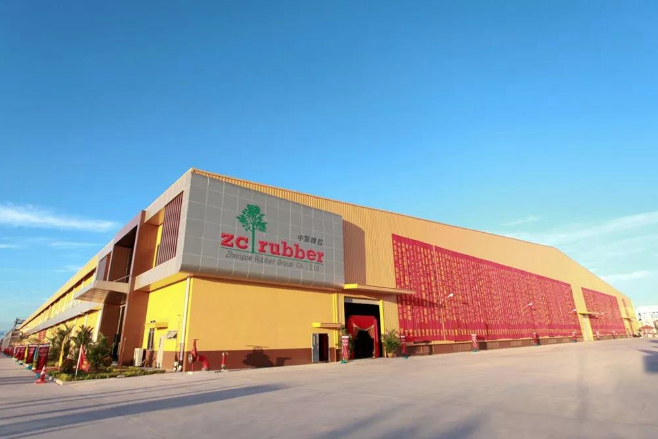
1. Zhongce Rubber (Chaoyang Tire)
China’s largest tire manufacturer, ranked 9th globally in 2025. Its core brand “Chaoyang Tire” was founded in 1966, covering passenger, commercial, and off-the-road tires.
2. Sailun Tire
Founded in 2002, ranked 10th globally in 2025. Pioneer of “liquid gold” tire technology, with an R&D center in Toronto, Canada.

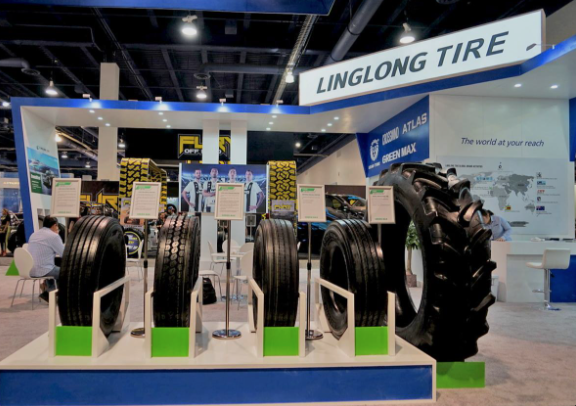
3. Linglong Tire
Founded in 1975, ranked 15th globally in 2025. Has been China’s OE market champion for many years, supplying over 60 OEMs.
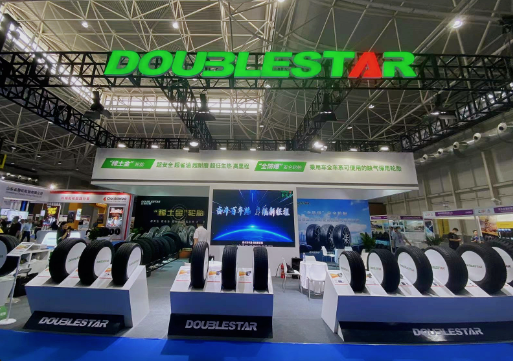
4. Doublestar Tire
Founded in 1921 with a century of history, a state-controlled enterprise in Qingdao. Built a full-process “Industry 4.0” smart factory.
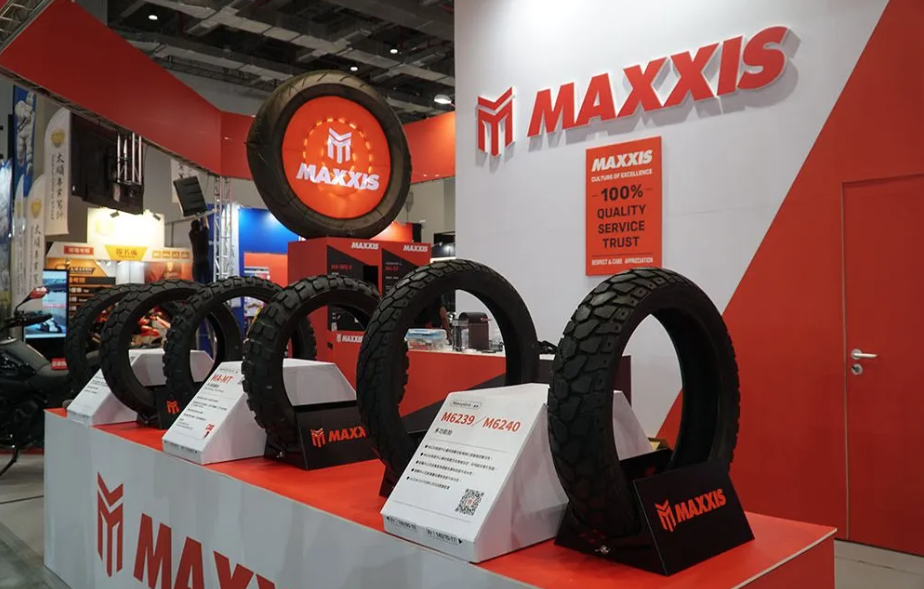
5. Maxxis Tire
Founded in 1967 in Taiwan, ranked 16th globally in 2025. Owns the international brand “Maxxis,” selling to over 200 countries and regions.
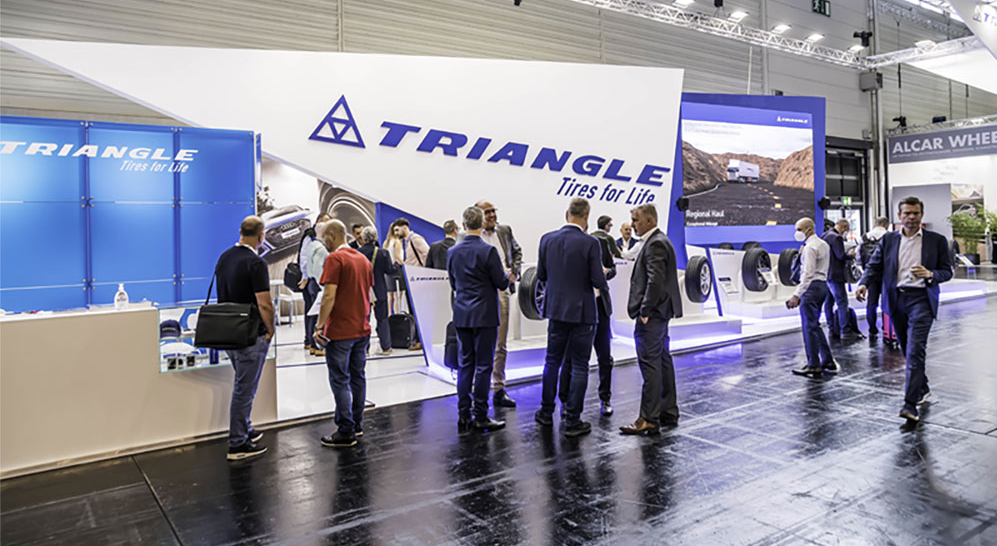
6. Triangle Tire
Founded in 1976, headquartered in Weihai, Shandong. Achieved breakthroughs in aviation radial tires, with OTR giant tires breaking foreign monopolies.
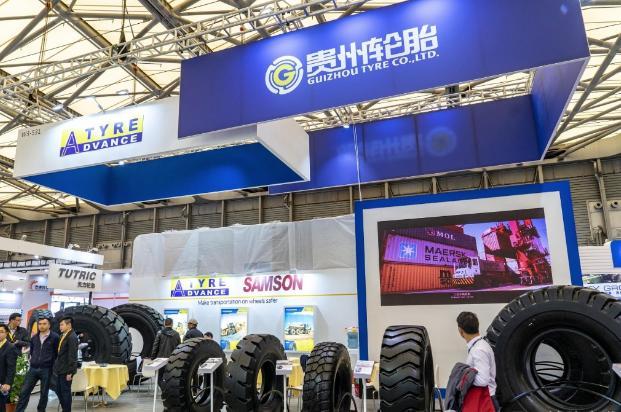
7. Guizhou Tire (Advance Tire)
Founded in 1958, with production bases in Guiyang and Vietnam. Its core brand “Advance Tire” has clear advantages in construction machinery and specialty tires.
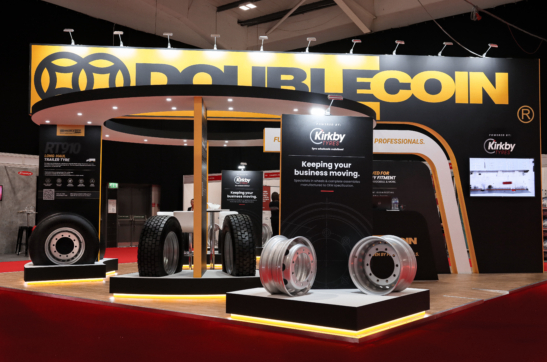
8. Double Coin Tire
Originating from the “Double Coin” brand founded in 1929, a representative of China’s rubber industry national brands. Technology leader in commercial vehicle tires, known for high load capacity and long mileage.
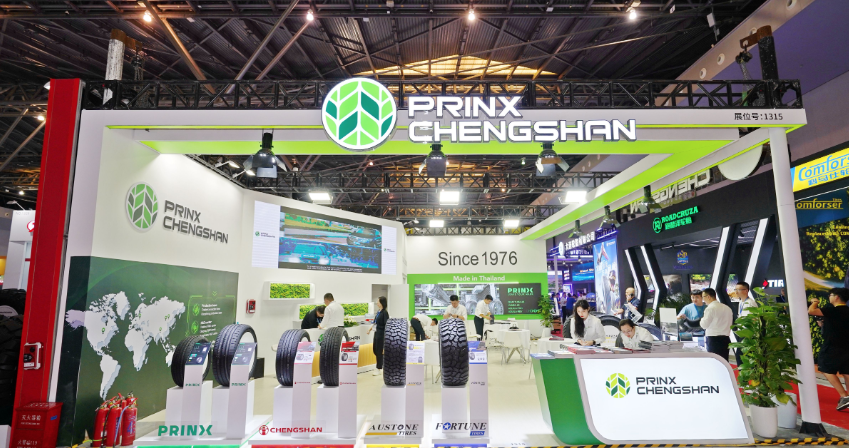
9. Prinx Chengshan
Founded in 1976, headquartered in Rongcheng, Shandong, listed on the Hong Kong Stock Exchange in 2018. Owns four brands: Prinx, Chengshan, Austone, and Fortune.
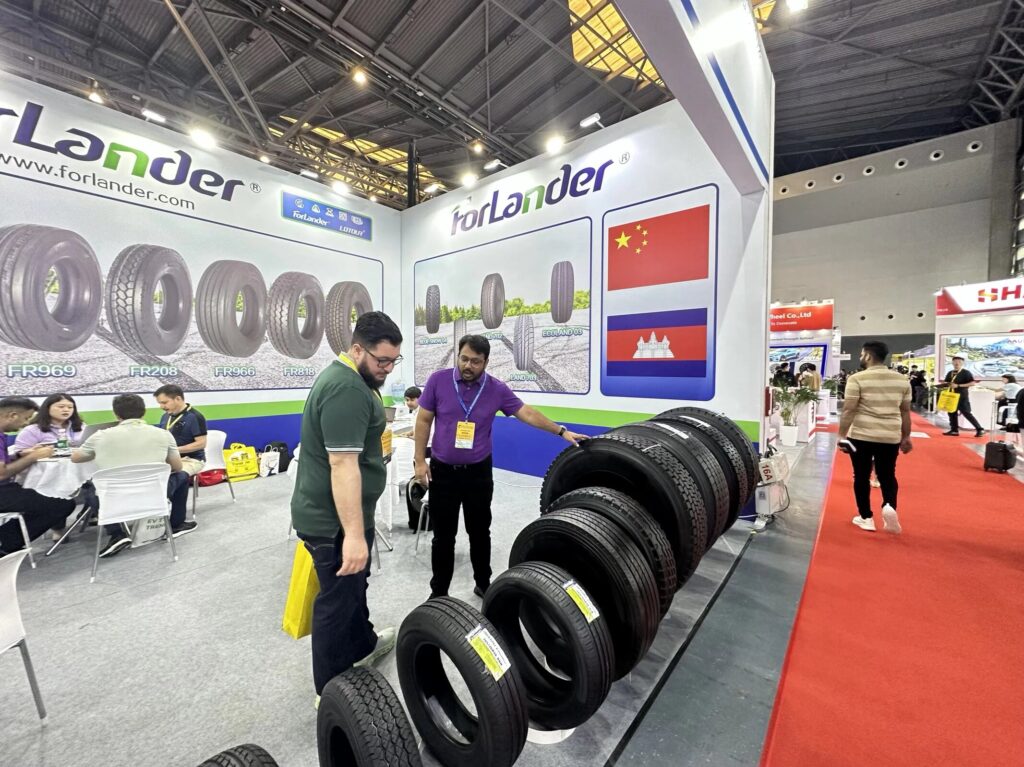
10. Forlander Tire
An important Chinese tire brand supplier to the Canadian market, consistently shipping to Canada through importer King Tire Trading. The Forlander FD959 tire (size 11R22.5, 18-ply) is sold in Quebec for truck and bus applications.
VI. Forlander Tire
Shandong Forlander Tire Co., Ltd. was founded in 2011. It is a high-tech enterprise focusing on the R&D, production, and sales of all-steel radial truck tires, passenger tires, and agricultural tires, with assets of nearly RMB 2 billion.
1. Product Portfolio
Forlander offers three product lines for the Canadian market:
PCR tires: including high-performance tires, SUV/AT/MT off-road tires, VAN light truck tires, and all-season tires
TBR tires: including sizes 11R22.5, 11R24.5, 295/75R22.5, suitable for long-haul, regional delivery, and off-road applications
Winter tires: PCR and TBR winter tire series for Canada’s long winters
2. International Certifications
Forlander products have obtained multiple international certifications: DOT (USA), ECE (Europe), ISO9001, CCC (China), GCC (Gulf), SONCAP (Nigeria), INMETRO (Brazil), and REACH (EU).
3. Canadian Customer Feedback
Forlander tires have received positive feedback from customers in major Canadian markets including Vancouver, Montreal, Edmonton, Toronto, and Winnipeg. For example, a Toronto long-haul fleet reported that “Forlander tires achieved 380,000 km on Canada-US routes”; a Vancouver logistics fleet tested the tires and reported “a 15% reduction in wet braking distance.”
4. Localized Service
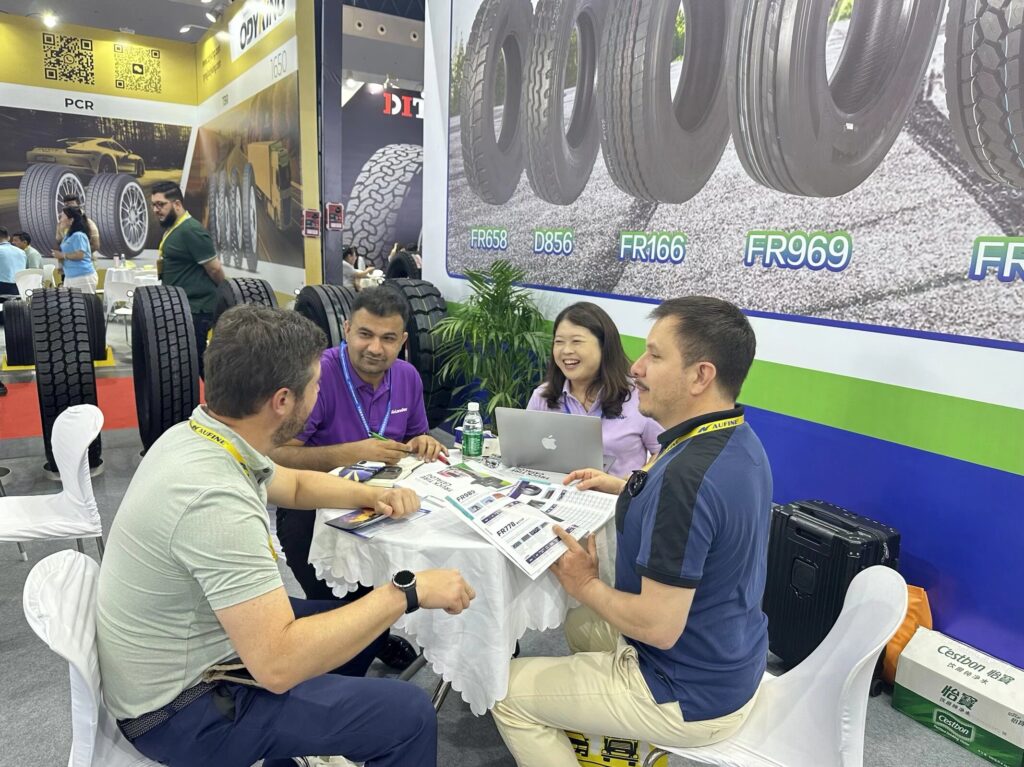
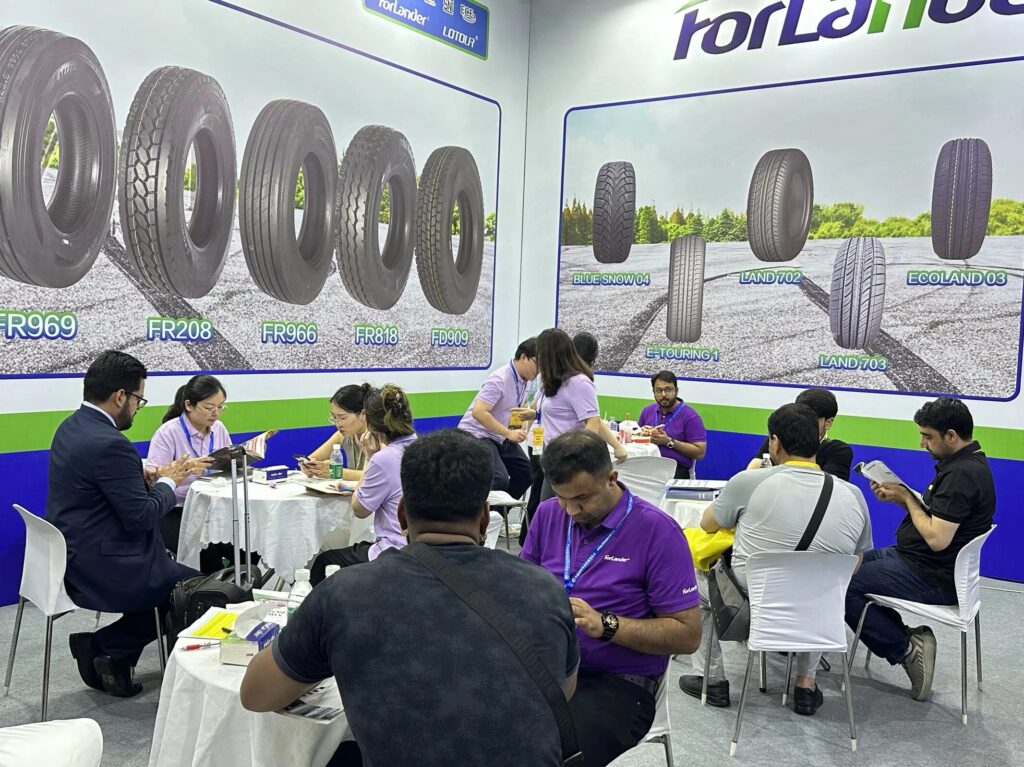
Forlander maintains in-depth cooperation with multiple Canadian importers and regularly sends teams to visit local customers, understand market needs, and provide technical support and after-sales service.
VII. Conclusion
The 2025 data clearly shows that whether for PCR or TBR, the market share of best Chinese tyre brands in Canada is steadily climbing. PCR exports reached 7.27 million units, rising to 12th place, while TBR exports grew 35% year-on-year to enter the top ten. This is not based on short-term price wars, but on a vast, efficient, and continuously improving Chinese tire industry foundation. For Canadian transport companies and vehicle owners, choosing a Chinese tire brand is a comprehensive consideration based on cost, quality, and supply stability.